How To Hack Atm Machine In South Africa
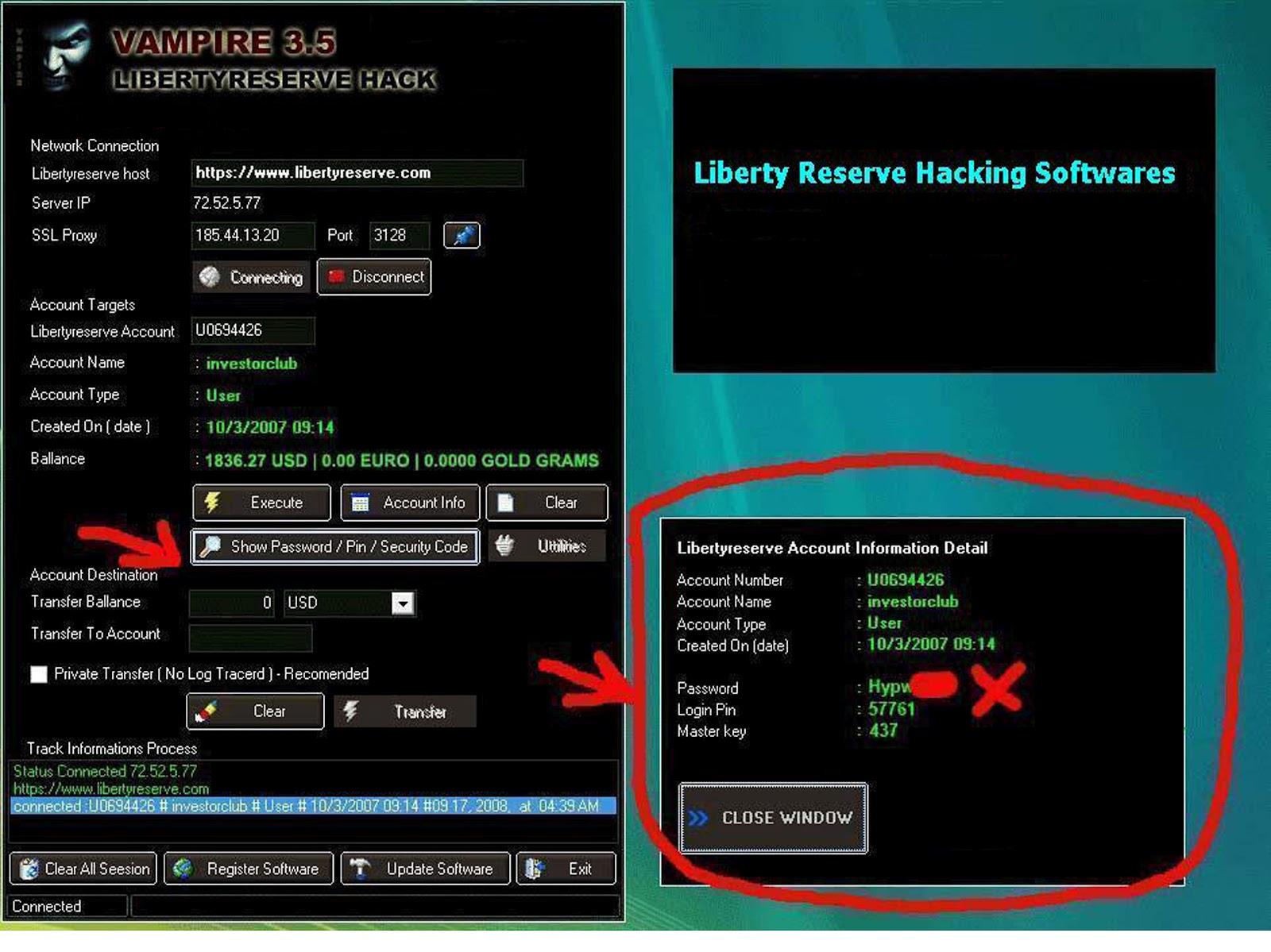
I install bank machines in South Africa and most of our products comes from USA,AUSTRALIA AND UK. I can Hack and take money directly from any ATM Machine Vault with the use of ATM Programmed Card which runs in automatic mode. Email adekulec@gmail.com for how to get it and its.
Smaller indoor ATMs dispense money inside and other busy areas, such as this off-premises mono-function ATM in. An automated teller machine ( ATM) is an electronic telecommunications device that enables customers of to perform, such as cash withdrawals, deposits, transfer funds, or obtaining account information, at any time and without the need for direct interaction with bank staff. ATMs are known by a variety of names, including automatic teller machine in the United States ( ATM, and ), often ATM machine, automated banking machine ( ABM, ). Although ABM is used in Canada, ATM is still very commonly used in Canada and many Canadian organization used ATM over ABM. In British English, the terms cash point, cash machine, minibank (the official name of the Yorkshire bank ATM's), and 'hole in the wall' are most widely used.
Other terms include cashline, nibank, tyme machine, cash dispenser, bankomat or bancomat. Many ATMs have a sign above them, indicating the name of the bank or organisation that owns the ATM, and possibly including the networks to which it can connect.
In Canada, ABMs that are not operated by a financial institution are known as. According to the, there are now close to 3.5 million ATMs installed worldwide. However, the use of ATMs in Australia is gradually declining – most notably in retail precincts.
On most modern ATMs, customers are identified by inserting a plastic (or some other acceptable payment card) into the ATM, with authentication being by the customer entering a (PIN), which must match the PIN stored in the chip on the card (if the card is so equipped), or in the issuing financial institution's database. Using an ATM, customers can access their bank deposit or credit accounts in order to make a variety of financial transactions such as withdrawals, check balances, or credit mobile phones. ATMs can be used to withdraw cash in a foreign country. If the currency being withdrawn from the ATM is different from that in which the bank account is denominated, the money will be converted at the financial institution's. An old ATM The idea of out-of-hours cash distribution developed from bankers' needs in Asia (Japan), Europe (Sweden and the United Kingdom) and North America (the United States). Little is known of the Japanese device other than that it was called 'Computer Loan Machine' and supplied cash as a three-month loan at 5% p.a.
After inserting a credit card. The device was operational in 1966. Adrian Ashfield invented the basic idea of a card combining the key and user's identity in February 1962. This was granted UK Patent 959,713 for 'Access Controller' in June 1964 and assigned to W. Atkins & Partners who employed Ashfield.
He was paid ten shillings for this, the standard sum for all patents. It was originally intended to dispense petrol but the patent covered all uses. In the US patent record, has been credited with developing a 'prior art device'. Specifically his 132nd patent (US3079603), which was first filed on 30 June 1960 (and granted 26 February 1963).
The roll-out of this machine, called Bankograph, was delayed by a couple of years, due in part to Simjian's Reflectone Electronics Inc. Being acquired by Universal Match Corporation. An experimental Bankograph was installed in in 1961 by the, but removed after six months due to the lack of customer acceptance.
The Bankograph was an automated envelope deposit machine (accepting coins, cash and cheques) and did not have cash dispensing features. Actor using the world's first cash machine in, north London on 27 June 1967 It is widely accepted that the first cash machine was put into use by in its branch in, United Kingdom, on 27 June 1967. This machine was inaugurated by English comedy actor.
This instance of the invention is credited to the engineering team led by of printing firm, who was awarded an in the. Transactions were initiated by inserting paper cheques issued by a teller or cashier, marked with for machine readability and security, which in a later model were matched with a six-digit (PIN).
Shepherd-Barron stated 'It struck me there must be a way I could get my own money, anywhere in the world or the UK. I hit upon the idea of a chocolate bar dispenser, but replacing chocolate with cash.' The Barclays–De La Rue machine (called De La Rue Automatic Cash System or DACS) beat the ' and a company called Metior's machine (a device called Bankomat) by a mere nine days and –– system (called Chubb MD2) by a month. The online version of the Swedish machine is listed to have been operational on 6 May 1968, while claiming to be the first online ATM in the world (ahead of a similar claim by and in 1971). The collaboration of a small start-up called Speytec and developed a fourth machine which was marketed after 1969 in Europe and the US by the. The patent for this device (GB1329964) was filed in September 1969 (and granted in 1973) by John David Edwards, Leonard Perkins, John Henry Donald, Peter Lee Chappell, Sean Benjamin Newcombe, and Malcom David Roe. Both the DACS and MD2 accepted only a single-use token or voucher which was retained by the machine, while the Speytec worked with a card with a magnetic stripe at the back.
They used principles including and low-coercivity in order to make fraud more difficult. ATM in, The idea of a PIN stored on the card was developed by a group of engineers working at on the Chubb MD2 in 1965 and which has been credited to (patent GB1197183 filed on 2 May 1966 with Anthony Davies).
The essence of this system was that it enabled the verification of the customer with the debited account without human intervention. This patent is also the earliest instance of a complete 'currency dispenser system' in the patent record. This patent was filed on 5 March 1968 in the US (US 3543904) and granted on 1 December 1970. It had a profound influence on the industry as a whole. Not only did future entrants into the cash dispenser market such as and licence Goodfellow's PIN system, but a number of later patents reference this patent as 'Prior Art Device'. Propagation Devices designed by British (i.e. Chubb, De La Rue) and Swedish (i.e.
Asea Meteor) quickly spread out. For example, given its link with, deployed a DACS in 1968 under the brand. Customers were given personal code numbers to activate the machines, similar to the modern PIN.
They were also supplied with £10 vouchers. These were fed into the machine, and the corresponding amount debited from the customer's account. A Chubb-made ATM appeared in in 1969.
This was the first ATM installed in. The machine only dispensed $25 at a time and the bank card itself would be mailed to the user after the bank had processed the withdrawal. 1969 news report on the introduction of ATMs in. People could only receive 25 at a time and the bank card was sent back to the user at a later date. This was a Chubb machine Asea Metior's Bankomat was the first ATM installed in on January 9, 1969, in downtown. This device dispensed 1,000 bills (1 to 5 max). Each user had to introduce a security personal key using a combination of the ten numeric buttons.
In March of the same year an ad with the instructions to use the Bancomat was published in the same newspaper. Docutel in the United States (1969) After looking firsthand at the experiences in Europe, in 1968 the ATM was pioneered in the U.S. By, who was a department head at a company called Docutel. Docutel was a subsidiary of Recognition Equipment Inc of, which was producing optical scanning equipment and had instructed Docutel to explore automated baggage handling and automated gasoline pumps. In 1969, a venture capital consortium purchased Docutel with the aim of bringing its ATM to market without delay. By 1974, Docutel had acquired 70 percent of the U.S.
Market; but as a result of the early 1970s worldwide recession and its reliance on a single product line, Docutel lost its independence and was forced to merge with the U.S. Subsidiary of. Wetzel was recognised by the United States Patent Office as having invented the ATM in the form of; the application had been filed in October 1971 and the patent was granted in 1973.
However, the U.S. Patent record cites at least three previous applications from Docutel, all relevant to the development of the ATM and where Wetzel does not figure, namely, and. These patents are all credited to Kenneth S. Goldstein, MR Karecki, TR Barnes, GR Chastian and John D. On September 2, 1969, installed the first ATM in the U.S.
At its branch in. The first ATMs were designed to dispense a fixed amount of cash when a user inserted a specially coded card. A Chemical Bank advertisement boasted 'On Sept. 2 our bank will open at 9:00 and never close again.' Chemical's ATM, initially known as a Docuteller was designed by and his company. Chemical executives were initially hesitant about the electronic banking transition given the high cost of the early machines.
Additionally, executives were concerned that customers would resist having machines handling their money. In 1995, the recognised Docutel and Wetzel as the inventors of the networked ATM. Continued improvements The first modern ATM was an IBM 2984 and came into use at Lloyds Bank, High Street, Brentwood, Essex, the UK in December 1972. The IBM 2984 was designed at the request of.
The 2984 Cash Issuing Terminal was the first true ATM, similar in function to today's machines and named by Lloyds Bank: Cashpoint. Cashpoint is still a of Lloyds Banking Group in the UK but is often used as a to refer to ATMs of all UK banks. All were online and issued a variable amount which was immediately deducted from the account. A small number of 2984s were supplied to a U.S. A couple of well known historical models of ATMs include the IBM 3614, and series, and series, and earlier NCR 770 series. The first switching system to enable shared automated teller machines between banks went into production operation on February 3, 1979, in Denver, Colorado, in an effort by Colorado National Bank of Denver and Kranzley and Company of Cherry Hill, New Jersey. The newest ATM at allows customers to withdraw cash up to £130 without a card by inputting a six-digit code requested through their smartphones.
Location ATMs can be placed at any location but are most often placed near or inside banks, shopping centers/malls, airports, grocery stores, petrol/gas stations, restaurants, and other locations. ATMs are also found on and on some ships, where sailors can draw out their pay. ATMs may be on- and off-premises. On-premises ATMs are typically more advanced, multi-function machines that complement a bank branch's capabilities, and are thus more expensive. Off-premises machines are deployed by financial institutions and Independent Sales Organisations (ISOs) where there is a simple need for cash, so they are generally cheaper single function devices. In the US, Canada and some, banks may have lanes providing access to ATMs using an automobile. In recent times, countries like India and some countries in Africa are installing ATMs in rural areas, which are solar powered.
Financial networks. An ATM in the. The of a number of to which it is connected are shown. Most ATMs are connected to, enabling people to withdraw and deposit money from machines not belonging to the bank where they have their accounts or in the countries where their accounts are held (enabling cash withdrawals in local currency). Some examples of interbank networks include, Interswitch, and. ATMs rely on authorization of a by the card issuer or other authorizing institution on a communications network. This is often performed through an messaging system.
Many banks charge. In some cases, these fees are charged solely to users who are not customers of the bank that operates the ATM; in other cases, they apply to all users. In order to allow a more diverse range of devices to attach to their networks, some interbank networks have passed rules expanding the definition of an ATM to be a terminal that either has the vault within its footprint or utilises the vault or cash drawer within the merchant establishment, which allows for the use of a. A with a dial-up modem visible at the base ATMs typically connect directly to their host or on either or dial-up over a line or directly on a leased line. Leased lines are preferable to (POTS) lines because they require less time to establish a connection. Less-trafficked machines will usually rely on a dial-up modem on a POTS line rather than using a leased line, since a leased line may be comparatively more expensive to operate compared to a POTS line.
That dilemma may be solved as high-speed Internet connections become more ubiquitous. Common lower-level layer communication protocols used by ATMs to communicate back to the bank include over, over, and over. In addition to methods employed for transaction security and secrecy, all communications traffic between the ATM and the Transaction Processor may also be encrypted using methods such as. Global use There are no hard international or government-compiled numbers totaling the complete number of ATMs in use worldwide. Estimates developed by place the number of ATMs currently in use at 3 million units, or approximately 1 ATM per 3000 people in the world. To simplify the analysis of ATM usage around the world, financial institutions generally divide the world into seven regions, due to the penetration rates, usage statistics, and features deployed. Four regions (USA, Canada, Europe, and Japan) have high numbers of ATMs per million people.
Despite the large number of ATMs, there is additional demand for machines in the Asia/Pacific area as well as in Latin America. May have the highest density of ATMs at 254 ATMs per 100,000 adults. ATMs have yet to reach high numbers in the Near East and Africa. The world's highest ATM is located at the in. Installed at an elevation of 15,397 feet by the, it is designed to work in temperatures of up to -40 degree Celsius. Hardware. Two employees refilling an ATM at the Downtown The vault of an ATM is within the footprint of the device itself and is where items of value are kept.
Do not incorporate a vault. Mechanisms found inside the vault may include:. Dispensing mechanism (to provide or other items of value). Deposit mechanism including a cheque processing module and bulk note acceptor (to allow the customer to make deposits).
Security sensors (magnetic, thermal, seismic, gas). Locks (to ensure controlled access to the contents of the vault). Journaling systems; many are electronic (a sealed flash memory device based on in-house standards) or a solid-state device (an actual printer) which accrues all records of activity including access timestamps, number of notes dispensed, etc. This is considered sensitive data and is secured in similar fashion to the cash as it is a similar liability. ATM vaults are supplied by manufacturers in several grades. Factors influencing vault grade selection include cost, weight, regulatory requirements, ATM type, operator risk avoidance practices and internal volume requirements. Industry standard vault configurations include 'Business Hours' and Level 1 Safes, TL-30 derivatives, and CEN EN 1143-1 - CEN III and CEN IV.
ATM manufacturers recommend that a vault be attached to the floor to prevent theft, though there is a record of a theft conducted by tunnelling into an ATM floor. Software. A ATM running Today, the vast majority of ATMs worldwide use a operating system, primarily. In early 2014, 95% of ATMs were running Windows XP.
A small number of deployments may still be running older versions of the Windows OS, such as,. There is a computer industry security view that general public desktop operating systems(os) have greater risks as operating systems for cash dispensing machines than other types of operating systems like (secure) (RTOS). Has many articles about ATM operating system vulnerabilities.
Is also finding some reception in the ATM marketplace. An example of this is, the largest bank in the south of, which has replaced the operating systems in its ATMs with Linux. Is also migrating ATMs to Linux. Indian-based is manufacturing ATMs which operate only with Linux.
Common application layer transaction protocols, such as 91x (911 or 912) and provide of older generations of hardware on newer platforms with incremental extensions made over time to address new capabilities, although companies like NCR continuously improve these protocols issuing newer versions (e.g. NCR's AANDC v3.x.y, where x.y are subversions). Most major ATM manufacturers provide software packages that implement these protocols. Newer protocols such as IFX have yet to find wide acceptance by transaction processors. With the move to a more standardised software base, financial institutions have been increasingly interested in the ability to pick and choose the application programs that drive their equipment., now known as, provides a common for accessing and manipulating the various devices of an ATM.
Is a Java implementation of the CEN XFS API. While the perceived benefit of XFS is similar to the Java's mantra, often different ATM hardware vendors have different interpretations of the XFS standard. The result of these differences in interpretation means that ATM applications typically use a to even out the differences among various platforms. With the onset of Windows operating systems and XFS on ATMs, the software applications have the ability to become more intelligent. This has created a new breed of ATM applications commonly referred to as programmable applications.
These types of applications allows for an entirely new host of applications in which the ATM terminal can do more than only communicate with the ATM switch. It is now empowered to connected to other content servers and systems. Notable ATM software that operates on XFS platforms include Triton PRISM, Agilis EmPower, AbsoluteINTERACT, Phoenix Interactive VISTAatm, EFTS and Intertech inter-ATM. With the move of ATMs to industry-standard computing environments, concern has risen about the integrity of the ATM's software stack. Security. A Procash 2100xe Frontload that was opened with an.
Early ATM security focused on making the terminals invulnerable to physical attack; they were effectively safes with dispenser mechanisms. A number of attacks resulted, with thieves attempting to steal entire machines. Since the late 1990s, criminal groups operating in Japan improved ram-raiding by stealing and using a truck loaded with heavy construction machinery to effectively demolish or uproot an entire ATM and any housing to steal its cash. Another attack method, plofkraak, is to seal all openings of the ATM with and fill the vault with a combustible gas or to place an explosive inside, attached, or near the machine.
This gas or explosive is ignited and the vault is opened or distorted by the force of the resulting explosion and the criminals can break in. This type of theft has occurred in the, and. These types of attacks can be prevented by a number of gas explosion prevention devices also known as gas suppression system. These systems use explosive gas detection sensor to detect explosive gas and to neutralise it by releasing a special explosion suppression chemical which changes the composition of the explosive gas and renders it ineffective. Several attacks in the UK (at least one of which was successful) have involved digging a concealed tunnel under the ATM and cutting through the reinforced base to remove the money. Modern ATM physical security, per other modern money-handling security, concentrates on denying the use of the money inside the machine to a thief, by using different types of.
A common method is to simply rob the staff filling the machine with money. To avoid this, the schedule for filling them is kept secret, varying and random. The money is often kept in cassettes, which will dye the money if incorrectly opened. Transactional secrecy and integrity The security of ATM transactions relies mostly on the integrity of the secure: the ATM often uses general commodity components that sometimes are not considered to be '. Encryption of personal information, required by law in many jurisdictions, is used to prevent fraud. Sensitive data in ATM transactions are usually with, but transaction processors now usually require the use of.
Remote Key Loading techniques may be used to ensure the secrecy of the initialisation of the encryption keys in the ATM. (MAC) or may also be used to ensure messages have not been tampered with while in transit between the ATM and the financial network.
Customer identity integrity. A ATM with a (to the right of the screen) There have also been a number of incidents of fraud by, where criminals have attached fake keypads or card readers to existing machines. These have then been used to record customers' PINs and bank card information in order to gain unauthorised access to their accounts. Various ATM manufacturers have put in place countermeasures to protect the equipment they manufacture from these threats.
Alternative methods to verify cardholder identities have been tested and deployed in some countries, such as finger and palm vein patterns, and technologies. Cheaper mass-produced equipment has been developed and is being installed in machines globally that detect the presence of foreign objects on the front of ATMs, current tests have shown 99% detection success for all types of devices. Device operation integrity. ATMs that are exposed to the outside must be vandal- and weather- resistant. Openings on the customer side of ATMs are often covered by mechanical shutters to prevent tampering with the mechanisms when they are not in use. Alarm sensors are placed inside ATMs and their servicing areas to alert their operators when doors have been opened by unauthorised personnel.
To protect against hackers, ATMs have a built-in firewall. Once the firewall has detected malicious attempts to break into the machine remotely, the firewall locks down the machine. Rules are usually set by the government or ATM operating body that dictate what happens when integrity systems fail. Depending on the jurisdiction, a bank may or may not be liable when an attempt is made to dispense a customer's money from an ATM and the money either gets outside of the ATM's vault, or was exposed in a non-secure fashion, or they are unable to determine the state of the money after a failed transaction.
Customers often commented that it is difficult to recover money lost in this way, but this is often complicated by the policies regarding suspicious activities typical of the criminal element. Customer security. Dunbar armored personnel watching over ATMs that have been installed in a In some countries, multiple and are a common feature. In the, The Comptroller's Office has advised the New York State Department of Banking to have more thorough safety inspections of ATMs in high crime areas. Consultants of ATM operators assert that the issue of customer security should have more focus by the banking industry; it has been suggested that efforts are now more concentrated on the preventive measure of deterrent legislation than on the problem of ongoing forced withdrawals. At least as far back as July 30, 1986, consultants of the industry have advised for the adoption of an emergency PIN system for ATMs, where the user is able to send a in response to a threat.
Legislative efforts to require an emergency PIN system have appeared in, and, but none have succeeded yet. In January 2009, Senate Bill 1355 was proposed in the Illinois Senate that revisits the issue of the reverse emergency PIN system. The bill is again supported by the police and denied by the banking lobby. In 1998, three towns outside Cleveland, Ohio, in response to an ATM crime wave, adopted legislation requiring that an switch be installed at all outdoor ATMs within their jurisdiction.
In the wake of a homicide in Sharon Hill, Pennsylvania, the city council passed an ATM security bill as well. In China and elsewhere, many efforts to promote security have been made. On-premises ATMs are often located inside the bank's lobby, which may be accessible 24 hours a day. These lobbies have extensive security camera coverage, a courtesy telephone for consulting with the bank staff, and a security guard on the premises. Bank lobbies that are not guarded 24 hours a day may also have secure doors that can only be opened from outside by swiping the bank card against a wall-mounted scanner, allowing the bank to identify which card enters the building.
Created as 2D single view locator process tool In the beginning there is one GPM locator that can only be adjusted to detect one specific object, you can see the adjustment toolbar in the next slide for this specific object among the other objects. We named it 'FRIDAY' as you can see the name in the picture. Because of software issues, it has no specific shape on it. In the following slides we are going to adjust the adjustments to get the desired locating tool to detect the position of objects below the camera relative to Cal Grid: This button is for creation of Vision Process tools. Fanuc robot programming manuals pdf.
Most ATMs will also display on-screen safety warnings and may also be fitted with convex mirrors above the display allowing the user to see what is happening behind them. As of 2013, the only claim available about the extent of ATM-connected homicides is that they range from 500 to 1,000 per year in the US, covering only cases where the victim had an ATM card and the card was used by the killer after the known time of death. Jackpotting The term jackpotting is used to describe one method criminals utilize to steal money from an ATM. The thieves gain physical access through a small hole drilled in the machine. They disconnect the existing hard drive and connect an external drive using an industrial endoscope. They then depress an internal button that reboots the device so that it is now under the control of the external drive. They can then have the ATM dispense all of its cash.
HDD Encryption In recent years, many ATMs also encrypt the hard disk. This means that actually creating the software for jackpotting is a lot more difficult to do. Gold vending ATM in. ATMs were originally developed as cash dispensers, and have evolved to provide many other bank-related functions:. Paying routine bills, fees, and taxes (utilities, phone bills, social security, legal fees, income taxes, etc.).
Printing or ordering. Updating. Cheque Processing Module. Paying (in full or partially) the credit balance on a card linked to a specific. Transferring money between linked accounts (such as transferring between accounts). Deposit currency recognition, acceptance, and recycling In some countries, especially those which benefit from a fully integrated cross-bank network (e.g.: in Portugal), ATMs include many functions that are not directly related to the management of one's own bank account, such as:.
Loading monetary value into. Adding pre-paid / credit. Purchasing. Concert tickets. tickets. Movie tickets. Donating to charities Increasingly, banks are seeking to use the ATM as a sales device to deliver pre approved loans and targeted advertising using products such as ITM (the Intelligent Teller Machine) from Aptra Relate from NCR.
ATMs can also act as an advertising channel for other companies. A ATM with mobile bank port and However, several different ATM technologies have not yet reached worldwide acceptance, such as:.
with human tellers, known as video tellers., where authorization of transactions is based on the scanning of a customer's fingerprint, iris, face, etc. Cheque/cash Acceptance, where the machine accepts and recognises cheques and/or currency without using envelopes Expected to grow in importance in the US through legislation. On-demand printing of 'items of value' (such as movie tickets, etc.). Dispensing additional media (such as phone cards). Co-ordination of ATMs with mobile phones.
Integration with non-banking equipment. Games and promotional features. through the ATM Videoconferencing teller machines are currently referred to as Interactive Teller Machines.
Benton Smith, in the Idaho Business Review writes 'The software that allows interactive teller machines to function was created by a Salt Lake City-based company called uGenius, a producer of video banking software. NCR, a leading manufacturer of ATMs, acquired uGenius in 2013 and married its own ATM hardware with uGenius' video software.' An ATM running that has due to a peripheral component failure Before an ATM is placed in a public place, it typically has undergone extensive testing with both and the computer systems that allow it to perform transactions. Banking customers also have come to expect high reliability in their ATMs, which provides incentives to ATM providers to minimise machine and network failures. Financial consequences of incorrect machine operation also provide high degrees of incentive to minimise malfunctions. ATMs and the supporting electronic financial networks are generally very reliable, with industry benchmarks typically producing 98.25% customer availability for ATMs and up to 99.999% availability for host systems that manage the networks of ATMs. If ATM networks do go out of service, customers could be left without the ability to make transactions until the beginning of their bank's next time of opening hours.
This said, not all errors are to the detriment of customers; there have been cases of machines giving out money without debiting the account, or giving out higher value notes as a result of incorrect of being loaded in the money cassettes. The result of receiving too much money may be influenced by the card holder agreement in place between the customer and the bank. Errors that can occur may be (such as card transport mechanisms; keypads;; envelope deposit mechanisms); (such as;; );; or purely down to operator error. To aid in reliability, some ATMs print each transaction to a roll-paper journal that is stored inside the ATM, which allows its users and the related financial institutions to settle things based on the records in the journal in case there is a dispute. In some cases, transactions are posted to an electronic journal to remove the cost of supplying journal paper to the ATM and for more convenient searching of data. Improper money checking can cause the possibility of a customer receiving banknotes from an ATM.
While bank personnel are generally trained better at spotting and removing counterfeit cash, the resulting ATM money supplies used by banks provide no guarantee for proper banknotes, as the has confirmed that there are regularly incidents of false banknotes having been dispensed through ATMs. Some ATMs may be stocked and wholly owned by outside companies, which can further complicate this problem. Technology can be used by ATM providers to help ensure the authenticity of the cash before it is stocked in the machine; those with cash recycling capabilities include this capability.
In India, whenever a transaction fails with an ATM due to network or technical issue and if the amount does not get dispensed in spite of account being debited then the banks are supposed to return back the debited amount to the customer within 7 working days from the day of receipt of complaint. Banks are also liable to pay the late fees in case of delay in repayment of funds post 7 days. Banknotes from an ATM robbery made unusable with As with any device containing objects of value, ATMs and the systems they depend on to function are the targets of fraud.
Fraud against ATMs and people's attempts to use them takes several forms. The first known instance of a fake ATM was installed at a shopping mall in in 1993. By modifying the inner workings of a model 7020 ATM, a criminal gang known as the Bucklands Boys stole information from cards inserted into the machine by customers. Reported an incident in Virginia Beach in September 2006 where a hacker, who had probably obtained a factory-default administrator password for a filling station's white-label ATM, caused the unit to assume it was loaded with US$5 bills instead of $20s, enabling himself—and many subsequent customers—to walk away with four times the money withdrawn from their accounts. This type of scam was featured on the TV series.
ATM behaviour can change during what is called 'stand-in' time, where the bank's cash dispensing network is unable to access databases that contain account information (possibly for database maintenance). In order to give customers access to cash, customers may be allowed to withdraw cash up to a certain amount that may be less than their usual daily withdrawal limit, but may still exceed the amount of available money in their accounts, which could result in fraud if the customers intentionally withdraw more money than what they had in their accounts. Card fraud In an attempt to prevent criminals from the customer's (PIN), some banks draw privacy areas on the floor.
For a low-tech form of fraud, the easiest is to simply steal a customer's card along with its PIN. A later variant of this approach is to trap the card inside of the ATM's card reader with a device often referred to as a. When the customer gets frustrated by not getting the card back and walks away from the machine, the criminal is able to remove the card and withdraw cash from the customer's account, using the card and its PIN. This type of fraud has spread globally. Although somewhat replaced in terms of volume by skimming incidents, a re-emergence of card trapping has been noticed in regions such as Europe, where EMV chip and PIN cards have increased in circulation.
Another simple form of fraud involves attempting to get the customer's bank to issue a new card and its PIN and stealing them from their mail. By contrast, a newer high-tech method of operating, sometimes called card skimming or card cloning, involves the installation of a magnetic card reader over the real ATM's card slot and the use of a wireless surveillance camera or a modified digital camera or a false PIN keypad to observe the user's PIN. Card data is then cloned into a duplicate card and the criminal attempts a standard cash withdrawal. The availability of low-cost commodity wireless cameras, keypads, card readers, and card writers has made it a relatively simple form of fraud, with comparatively low risk to the fraudsters. In an attempt to stop these practices, countermeasures against card cloning have been developed by the banking industry, in particular by the use of which cannot easily be copied or spoofed by unauthenticated devices, and by attempting to make the outside of their ATMs. Older chip-card security systems include the French, and. The most actively developed form of smart card security in the industry today is known as.
Is widely used in the UK and other parts of Europe, but when it is not available in a specific area, ATMs must fall back to using the easy–to–copy magnetic stripe to perform transactions. This fallback behaviour can be exploited. However, the fallback option has been removed on the ATMs of some UK banks, meaning if the chip is not read, the transaction will be declined. Card cloning and can be detected by the implementation of magnetic card reader heads and firmware that can read a signature embedded in all magnetic stripes during the card production process. This signature, known as a 'MagnePrint' or 'BluPrint', can be used in conjunction with common two-factor authentication schemes used in ATM, debit/retail point-of-sale and prepaid card applications. The concept and various methods of copying the contents of an ATM card's magnetic stripe onto a duplicate card to access other people's financial information was well known in the hacking communities by late 1990.
In 1996, Andrew Stone, a computer security consultant from Hampshire in the UK, was convicted of stealing more than £1 million by pointing high-definition video cameras at ATMs from a considerable distance and recording the card numbers, expiry dates, etc. From the embossed detail on the ATM cards along with video footage of the PINs being entered.
After getting all the information from the videotapes, he was able to produce clone cards which not only allowed him to withdraw the full daily limit for each account, but also allowed him to sidestep withdrawal limits by using multiple copied cards. In court, it was shown that he could withdraw as much as £10,000 per hour by using this method. Stone was sentenced to five years and six months in prison. Related devices A is a type of ATM that provides audible instructions so that people who cannot read a screen can independently use the machine, therefore effectively eliminating the need for assistance from an external, potentially malevolent source.
All audible information is delivered privately through a standard on the face of the machine. Alternatively, some banks such as the and use a built-in external speaker which may be invoked by pressing the talk button on the keypad. Information is delivered to the customer either through pre-recorded files or via text-to-speech. A postal may share many components of an ATM (including a vault), but it only dispenses items related to postage. A may have many components in common with an ATM, but it lacks the ability to dispense physical cash and consequently requires no vault. Instead, the customer requests a withdrawal transaction from the machine, which prints a receipt.
The customer then takes this receipt to a nearby sales clerk, who then exchanges it for cash from the till. A (TAU) is distinct in that it is designed to be operated solely by trained personnel and not by the general public, does integrate directly into interbank networks, and usually is controlled by a computer that is not directly integrated into the overall construction of the unit. A Web ATM is an online interface for ATM card banking that uses a. All the usual ATM functions are available, except for withdrawing cash. Most banks in provide these online services. See also.
Springfield, MA: Merriam-Webster. From the original on 12 August 2017. Retrieved 7 January 2017. From the original on 7 April 2014. 7 April 2014 at the.
Interac Association. Retrieved January 28, 2018. Canada, Financial Consumer Agency of. Retrieved 2018-07-29. Retrieved 2018-07-29.
Retrieved 2018-07-29. Springfield, MA: Merriam-Webster. From the original on 9 January 2017. Retrieved 7 January 2017.
From the original on 16 October 2015. From the original on 26 June 2015. 4 December 2017 at the. Schlichter, Sarah (2007-02-05).
Retrieved 2011-02-11. The Atlantic. 26 March 2015. From the original on 28 April 2015. Retrieved 26 April 2015. 27 March 2013. From the original on 9 February 2014.
ATM Industry Association. October 2015. (PDF) from the original on 18 August 2016.
Retrieved 29 June 2016. 'Fast Machine With a Buck','Pacific Star and Stripes', 7 July 1966.
'Instant Cash with a Credit Card', 'ABA Banking Journal', January 1967. 'Universal Match Maps Acquisition', The New York Times, 22 March 1961.
'Machine Accepts Bank Deposits', The New York Times, 12 April 1961. ATM Marketplace.
31 July 2013. Archived from on 15 August 2013.
Retrieved 27 September 2013. Batiz-Lazo, Bernardo; Reid, Robert J. (30 June 2008). Munich Personal RePEc Archive. (PDF) from the original on 4 September 2015. Retrieved 27 April 2015. 27 June 2007.
From the original on 3 November 2015. ^ Milligan, Brian (25 June 2007). From the original on 26 December 2009.
Retrieved 26 April 2010. 31 December 2004. From the original on 8 June 2010. Retrieved 26 April 2010. ^ Harper, Tom; Batiz-Lazo, Bernardo (2013).
Networld Media Group. Los Angeles Times. From the original on 23 May 2010.
Mary Bellis. Retrieved 2011-04-29. Business History, 2009 (51:1). Taylor and Francis, 2009. From the original on 3 November 2014. Batiz-Lazo, T. Karlsson and B.
Essays in Economic and Business History, 2014 (32). The Economic and Business History Society, 2014. From the original on 14 July 2014.
Retrieved 29 March 2018. Batiz-Lazo and R.
History of Telecommunications Conference, 2008. Histelcon 2008. From the original on 3 November 2014. Marino Gomez-Santos (9 January 1969).
From the original on 11 August 2014. 18 March 1969. From the original on 11 August 2014. Essinger, James (1987). ATM Networks: Their Organization, Security and Future. Elsevier International.
Kirkpatrick, Rob (2009). Skyhorse Publishing Inc. From the original on 25 December 2011. From the original on 25 December 2011. Retrieved 11 February 2011. From the original on 20 February 2011.
Retrieved 2011-02-11. The History of Computing Project. 17 April 2006. From the original on 20 February 2011. Retrieved 2011-02-11. personal knowledge of William Patterson who was there supporting the network. 12 June 2012.
From the original on 13 June 2012. 3 March 2013 at the. Retrieved on 2013-08-02. NT, Balanarayan (14 March 2010).
From the original on 25 May 2015. Retrieved 24 May 2015. Retrieved July 2, 2018. 16 October 2015 at the. Archived from on 13 September 2011. Retrieved 2011-09-15.
(PDF) from the original on 23 December 2016. Retrieved 22 December 2016. Archived from on 5 October 2006.
Retrieved 2006-08-11. From the original on 17 January 2011. Retrieved 2011-02-11. From the original on 16 January 2011. Retrieved 2011-02-11.
From the original on 11 November 2013. Retrieved 19 February 2014. Fraiser, Naill (5 May 2017). From the original on 5 May 2017. Retrieved 5 May 2017. (PDF) from the original on 24 August 2006.
Retrieved 11 August 2006. Daily Pakistan. From the original on 27 April 2017. Retrieved 26 April 2017.
(PDF) from the original on 11 June 2014. Retrieved 7 March 2014.
From the original on 8 March 2014. Retrieved 7 March 2014. From the original on 19 October 2009.
Retrieved 11 February 2011. 21 December 2004. Archived from on 5 January 2011. Retrieved 11 February 2011. 22 November 2006 at the. Archived from on 12 October 2007.
Retrieved 2011-02-11. Retrieved 2011-02-11. 14 January 2012. From the original on 14 January 2012. Retrieved 2 January 2012.
From the original on 4 December 2017. Retrieved 23 January 2018.
Archived from on 29 March 2009. Retrieved 2011-02-11. From the original on 18 March 2012. Retrieved 11 February 2011. From the original on 21 November 2015. Retrieved 15 September 2015. 12 July 2008.
From the original on 14 January 2012. Retrieved 7 April 2011. From the original on 10 August 2017. 25 November 2008. From the original on 29 June 2011. Retrieved 11 February 2011.
12 October 2006 at the. ATM Marketplace.
Retrieved 2011-02-11. (PDF) from the original on 30 September 2009. Retrieved 11 February 2011.
3 May 2015 at the. 1 May 2015 at the. Kilpailu- ja kuluttajavirasto.
From the original on 17 April 2008. Retrieved 11 February 2011. Archived from on 10 April 2011.
Retrieved 2011-02-11. Archived from on 10 June 2011.
Retrieved 2011-02-11. 9 May 2006 at the. 9 May 2006 at the. Representative Mario Biaggi, Congressional Record, July 30, 1986, Page 18232 et seq. Archived from on 4 November 2010. Retrieved 2011-02-11. 16 October 2015 at the.
Retrieved on 2013-08-02. Archived from on 31 August 2010. Retrieved 2011-02-11. From the original on 11 November 2010. Retrieved 11 February 2011.
Kravetz, Andy (18 February 2009). From the original on 18 January 2011. Retrieved 11 February 2011.
13 October 2014 at the. Retrieved on 2013-08-02. January 27, 2018. Retrieved 2018-01-28. Archived from on 29 March 2009. Retrieved 2011-02-11. From the original on 3 April 2012.
Retrieved 11 February 2011., 10 July 2011 at the., July 7, 2011 12:00 a.m. Retrieved 2011-07-07. Harvey, Rachel (10 January 2006). From the original on 15 January 2009. Retrieved 11 February 2011. (in German).
From the original on 27 September 2007. Retrieved 11 February 2011. 10 March 2005. From the original on 29 September 2011.
Retrieved 11 February 2011. Fernandes, Deirdre (5 September 2013).
The Boston Globe. From the original on 14 October 2013.
Retrieved 13 October 2013. 6 August 2006. From the original on 15 August 2010. Retrieved 11 February 2011. From the original on 3 September 2011. Retrieved 11 February 2011. Mastrull, Diane (11 November 1996).
From the original on 17 April 2012. Retrieved 11 February 2011. Archived from on 11 May 2008. Retrieved 2011-02-11. Archived from on 12 December 2010.
Retrieved 2011-02-11. From the original on 29 June 2011. Retrieved 11 February 2011. From the original on 16 March 2012. Retrieved 11 February 2011.
Archived from on 28 May 2009. Retrieved 2011-02-11. 20 July 2005. From the original on 15 January 2009. Retrieved 11 February 2011.
Smith, Benton Alexander (June 16, 2016). The Idaho Business Review. From the original on 16 January 2011. Retrieved 11 February 2011. Rebecca Allison (2003-01-16).
London: The Guardian. Retrieved 2011-02-11. 22 November 2006 at the. 28 April 2004. From the original on 15 January 2009. From the original on 28 June 2006.
Retrieved 5 August 2006. 23 December 2005.
From the original on 15 January 2009. Retrieved 11 February 2011. 10 September 2015 at the. Archived from on 11 May 2008. Retrieved 11 February 2011. Retrieved 2011-02-11. (in German).
From the original on 27 September 2007. Retrieved 11 February 2011. Patton, Phil.
From the original on 29 October 2010. Retrieved 11 February 2011. From the original on 9 November 2012. Retrieved 11 February 2011. Retrieved 2011-02-11. 4 March 2009.
From the original on 24 October 2010. Retrieved 11 February 2011. Archived from on 24 July 2008.
Retrieved 2008-03-13. snopes (29 March 2016). Fast Company. 28 February 2002. From the original on 1 July 2010. Retrieved 11 February 2011. Chennai, India: The Hindu.
From the original on 10 August 2011. Retrieved 11 February 2011.
Rice, Organised Crime Civilian Response. From the original on 21 November 2010. Retrieved 11 February 2011. Stephen Castell. From the original on 12 October 2007. Retrieved 11 February 2011.
pepsi says: (25 January 2011). From the original on 29 January 2011. Retrieved 11 February 2011. Archived from on 3 January 2011. Retrieved 2011-02-11. 13 April 2016 at the. Retrieved on 2013-08-02.
From the original on 24 March 2011. Retrieved 11 February 2011. From the original on 19 March 2015. From the original on 9 April 2015.